

 Decking Calculator





Australian homeowners and business owners love composite decks because of their premium durability, longevity, and aesthetic appeal. They add a unique visual touch to your home or commercial space, enhancing its property value and providing you with a wise, long-term financial investment. With consistent, proper care and maintenance, these benefits are not just immediate, but long-lasting.
Unlike conventional decks made of authentic wood, composite decks are made of a combination of timber and plastics. The latter’s hybrid composition requires less maintenance, relieving busy homeowners of the burden of tedious, frequent upkeep. Rest assured, cleaning composite decking boards is still mandatory to ensure they last longer. The process is straightforward and manageable.
This task may seem intimidating at first. However, there’s no need to worry if you haven’t done it before. As a trusted Sydney composite decking supplier with extensive industry experience, we can help you get started. This blog will delve deeper into how to clean composite decking, empowering you to take charge of your surroundings and enjoy its long-term benefits.
Key Takeaways
- Use warm, soapy water and a soft-bristle brush for general cleaning.
- Rinse thoroughly with water after washing.
- Pressure cleaning/power washing should be done with caution – if used, use appropriate pressure and distance.
- For grease, oil or stubborn stains, use a cleaner designed for composite decking and test first in an inconspicuous area.
- Regular maintenance is needed to keep the decking looking good and prolong its lifespan.
Composite Decking 101
Composite decking’s wood fibres and plastic components make it stronger than its conventional timber counterpart. It’s a sustainable, low-maintenance fixture that can last up to 50 years with proper and consistent cleaning and upkeep. Composite decking can mimic the look and feel of traditional timber decks without frequent, tedious maintenance, allowing you to enjoy an aesthetically pleasing fixture without the stress.
The three types of composite decks include the following:
- Solid: These are resilient composite decks resembling authentic wood commonly used on swimming pool decks, residential pathways, and permanent flooring in heavy-traffic areas, including hotels, restaurants, homes, and offices. Unfortunately, solid composite decks might expand and contract in extreme climates.
- Hollow: Hollow composite decks (blank composite boards) are lightweight and prone to impacts, requiring edge caps to minimise damage. Since they look less authentic than the solid version, homeowners or business owners who prioritise aesthetic appeal often resort to other alternatives.
- Capped: Capped composite decks’ core is a wood byproduct and a recycled plastic compound. They also have a synthetic cap that enhances resistance to stains, scratches, and discolouration. These durable fixtures make many swimming pools, patios, and outdoor living spaces elegant and eye-catching.
The advantages of composite decks include the following:
- Superior durability
- Low maintenance
- Stunning visual appeal
- Guaranteed safety
- Enhanced property value
On the other hand, the disadvantages of composite decks include:
- Steep upfront costs
- Limited refinishing options
- Susceptibility to expansion and contraction in extreme weather
- Limited recyclability
Despite composite decking’s various benefits, it requires regular cleaning and care to maintain its components, ensuring longevity and a high return on investment. Although they are more durable than conventional timber decking, they may fade, mould, or stain without consistent maintenance and cleaning. For more on why colour changes over time, see does composite decking fade over time.
Why Are Cleaning And Sealing Recommended for Composite Decks?
Extreme climates, such as harsh sunlight and heavy rainfall, can compromise your composite decking’s durability and lifespan. Taking proactive steps in composite decking maintenance and cleaning ensures long-term results and peace of mind. Vigilant homeowners and business owners not only ensure eye-catching aesthetics, but also an estimated 30-to-50-year lifespan that enhances curb appeal and property value, providing them with a secure financial investment.
Composite Decking Cleaning Procedure
Step 1: Secure the Appropriate Materials and Equipment
Whether you clean your composite decking yourself or hire a trusted decking supplier to clean it for you, we recommend the following materials to ensure optimum results:
- A premium pH-neutral or a mild detergent-based composite decking cleaner that eliminates dirt, mould, and mildew and preserves the decking
- A soft-bristled brush
- A premium UV- and moisture-resistant sealant
- A paint roller or brush
- Gloves and safety goggles
You can purchase these materials from your local hardware store. When choosing the right materials, consider your composite deck’s specific cleaning requirements, local climate, and budget. If you require assistance, your contractor can provide you with valuable information on the best materials for your composite deck.
Step 2: Organise the Decking Area
Preparation is critical when cleaning and sealing composite decking. Organising the decking area before cleaning it prevents issues from escalating.
First, remove furniture, plants, rugs, and other items from your deck. Next, clear debris, including leaves, dirt, twigs, branches, pollen, bird droppings, and food crumbs, using a leaf blower or a broom. Ensure that you leave no trace of debris to facilitate effective sealing.
Finally, inspect the entire decking area and check for potential structural or wear and tear issues. If you discover any problems, your service provider can recommend the appropriate solution and provide you with long-term peace of mind.
Step 3: Clean And Dry The Decking
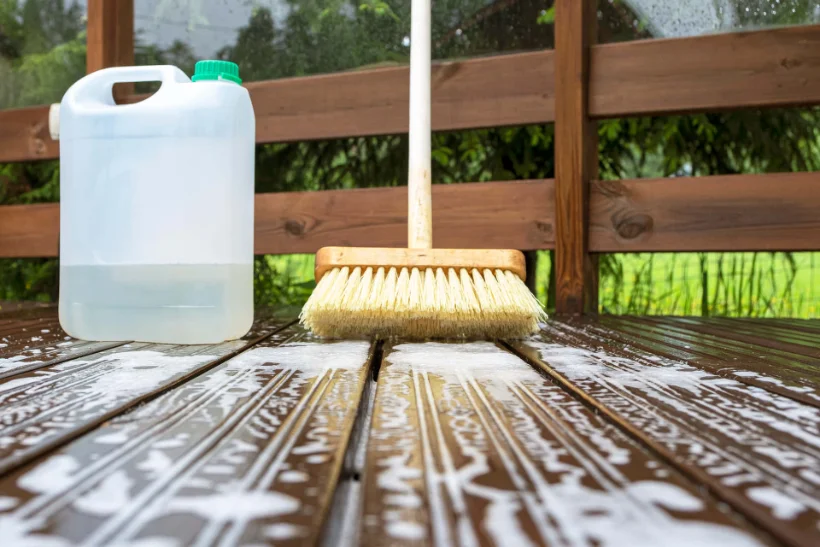
Use a premium pH-neutral or mild detergent-based composite deck cleaner such as Ezy Decking’s Aqualis Composite Bright and a soft-bristle brush to clean your composite decking. Test the cleaner on a small, hidden section to ensure that it doesn’t react with the material. Apply the cleaner evenly onto the surface to loosen dirt, mould, and stains. Please note that some areas may require more cleaning than others, so meticulously apply the cleaner and brush away stubborn stains or dirt.
Use a hose to rinse the composite deck thoroughly and wash away debris, dirt, and residue. Although pressure washing may be a quick and easy solution to clean composite decking, it may compromise its structural integrity, especially with improper use. For this reason, using a hose is enough to rinse the composite deck. If you prefer using a power washer, use a low-pressure setting to preserve the fixture’s structural integrity. For more on the risks of getting this wrong, see our 4 ways to avoid damage to your composite decking.
Step 4: Use The Appropriate Deck Sealer
Mix the sealant thoroughly to ensure a smooth, consistent blend. Use a paint roller to apply the sealant evenly over the decking, including discreet nooks and crannies, to achieve optimum results. Please remember that sealant drying times vary. Check your manufacturer’s recommended drying time and follow it accordingly.
Although DIY composite decking sealing is achievable for beginners, the process can be challenging, especially if you have an expansive floor space. Hiring a trusted composite decking provider can save you plenty of time and effort while also guaranteeing long-term results.
Step 5: Conduct Long-Term Maintenance
Composite deck sealing and cleaning are your first line of defence against structural degradation and wear and tear. Cleaning at least once annually will help you preserve your fixture’s aesthetics and durability. More frequent cleaning will produce better long-term results. Please avoid abrasive tools or harsh cleaning materials to prevent damage. These are among the top 8 maintenance blunders to avoid that catch homeowners out.
FAQs
What is the best thing to clean composite decking with?
For general cleaning purposes, warm, soapy water and a soft-bristle brush are the best options for cleaning composite decking. This straightforward process, brushing gently along the grains and rinsing thoroughly with a garden hose to remove soapy residue, can be easily done by Australian homeowners, providing a sense of reassurance and control over their decking.
Performing general cleaning every one to three months provides Australian homeowners with a sense of control over their decking, ensuring long-lasting visual appeal and functionality.
Tougher, stubborn stains require a specialised composite deck cleaner or a mixture of mild dish soap and water. A pressure washer with a setting of under 1,500 psi, or as recommended by the manufacturer, helps remove these eyesores. Ensure that the nozzle is at least 250mm from the surface, spraying along the direction of the boards.
Decking Bright can be purchased directly from our online store, which, when applied, ensures a fresh, clean look to all composite decks, stains, handrails, cladding, screening, furniture, etc.
How often should I clean composite decking?
We recommend performing weekly or bi-weekly light cleaning, including sweeping and rinsing, to maintain the visual appeal, prevent mould and mildew growth, and extend the fixture’s lifespan. General cleaning with warm, soapy water and a soft-bristled brush, done every one to three months, helps prevent the buildup of dirt, grime, pollen, and debris.
On the other hand, we recommend deep cleaning at least once a year to remove deeply embedded dirt and grime, reduce long-term staining, and maintain the manufacturer’s warranty. Older or uncapped composite decking requires deep cleaning twice a year to reap these benefits.
Will white vinegar damage composite decking?
White vinegar is generally safe for cleaning composite decks. However, it’s important to note that it’s not the ideal cleaning solution.
However, mixing one cup of distilled white vinegar, warm water, and ½ cup of bicarbonate (baking) soda is an efficient DIY cleaning solution to eliminate debris and stains. Alternatively, consult your local retailer or decking contractor on the appropriate cleaning solution for your outdoor fixture.
How do you make composite decking look new again?
You can make composite decking look new again by following these steps:
- First, thoroughly clean the surface with a premium composite deck cleaning solution or a mixture of mild soap and water.
- Use a deck restoration product to rejuvenate the colour and protect the surface.
- For deep cleaning purposes, use a pressure washer with a maximum setting of 1,500 psi and a wide spray nozzle. Ensure that you spray at least 250mm from the surface and along the direction of the boards.
- Alternatively, you can gently scrub the surface with a soft-bristle brush. Ensure that you rinse the surface thoroughly with a garden hose to remove any residue from the cleaning solution.
Can I clean composite decking with washing-up liquid?
Washing-up liquid is a suitable approach to cleaning composite decking. Mix it with warm water and use a soft-bristled brush to scrub the surface gently. Thoroughly rinse the surface with a garden hose to remove any soapy residue.
Can you use Dawn dish soap to clean a composite deck?
Many manufacturers recommend cleaning composite decks with Dawn dish soap for its numerous benefits, including the following:
- Gentle cleaning properties: Dawn dish soap is a mild and non-abrasive cleaning solution that preserves the decking’s structural integrity.
- Oil and grease remover: Dawn dish soap effectively breaks down grease, allowing homeowners to rinse it away without the need for aggressive scrubbing. Hence, this cleaning solution is perfect for families who enjoy outdoor BBQs, which tend to accumulate oil and grease spills, providing them with long-term peace of mind.
- Composite-friendly: Whether you prefer uncapped or capped composite decking, Dawn dish soap’s mild formula won’t discolour the surface, providing you with a sense of reassurance while cleaning.
- Affordable: Not only is Dawn dish soap readily available in most Australian retail stores, but it’s also affordable and cost-effective. Hence, it’s an economical solution for regular deck maintenance.
You can clean your composite decking with Dawn dish soap by following these steps:
- Mix a small amount of Dawn dish soap with warm water.
- Scrub gently with a soft-bristled brush along the direction of the boards.
- Rinse thoroughly with water.
- Repeat the steps for tough, stubborn strains as often as necessary.
What is the best household cleaner for composite decking?
Mild soap or dishwashing liquid, combined with warm water, is the best household cleaning solution for composite decking. This cost-effective strategy ensures a visually appealing and long-lasting outdoor fixture, making you feel that decking maintenance is a worthwhile investment.
Please avoid using harsh chemicals (such as bleach or acetone), which can damage composite decking boards. Tough, stubborn stains require a premium composite deck cleaning solution or a mixture of distilled white vinegar and water.
We recommend testing a small, discreet area of the decking first to ensure the solution doesn’t cause discolouration and surface damage, providing long-term peace of mind.
Why does my composite deck always look dirty?
There are several reasons why your composite decking may always appear dirty.
Environmental factors, such as pollen, wind-blown dust, leaves, and mildew, can contribute to this unsightly appearance. Additionally, scratches, grease, and oil residue, can also compromise the visual appeal of your decking.
Regular cleaning and periodic deep cleaning are essential to ensure your composite deck remains pristine and immaculate year-round.
It’s essential to note that the material can still trap dirt after cleaning it. Uneven weathering from heavy furniture can also create an irregular surface on composite decking.
You can prevent this scenario by following these steps:
- Place protective pads on the feet of heavy furniture.
- Reposition outdoor furniture every few months to prevent prolonged shading on pressure spots and minimise colour fading.
- Use outdoor rugs or mats that allow airflow and drainage to protect the decking’s long-term structural integrity.
- Place plywood sheets or composite-friendly platforms underneath heavy furniture, such as hot tubs and large planters, to distribute the weight evenly.
Avoid dragging heavy items on composite decking to prevent scratches or gouges. Cleaning the deck and removing debris underneath furniture can prevent moisture accumulation and preserve the fixture’s durability.
What is the best homemade deck cleaner?
A mixture consisting of oxygen bleach and water or distilled white vinegar and water is the best homemade composite deck cleaner due to its efficiency, safety, and sustainable features.
Alternatively, mixing ½ cup of baking soda with 10 litres of water can eliminate tough, stubborn grime and stains. On the other hand, mixing ¼ cup of oxygenated bleach with 1 litre of water and ¼ cup of dish soap can help remove mildew and algae that accumulate on composite decks.
Can I use Murphy’s Oil Soap on composite decking?
You can use Murphy’s Oil Soap on composite decking provided that you dilute it properly in warm water. We recommend using only ammonia-free products to prevent long-term surface damage and ensure your peace of mind.
Combining Murphy’s Oil Soap with oxygen bleach and rubbing alcohol usually produces optimal results. Use a soft-bristled brush to scrub the surface gently, then rinse thoroughly with water afterwards.
Can I jet wash my composite decking?
Jet washing composite decking is fine provided that you use a wide-tip fan nozzle with low-pressure settings (a maximum of 1,500 psi) and spray at least 250mm from the surface along the direction of the grains.
Spraying too close to the decking can cause discolouration and etching, so taking proactive steps and the necessary precautions can preserve your fixture’s long-term durability.
Conclusion
Going the extra mile is the best way to clean a composite deck. Conducting frequent inspections for signs of wear and tear or damage can help prevent costly replacements over time. A professional composite deck supplier in your area can do this for you and ensure that you receive a high return on investment.
Ezy Decking provides premium quality composite decking boards with 10 year structural warranty to Brisbane, Gold Coast, Sydney & Northern NSW. Contact us today for a free quote.
Related Articles
Benefits of Aluminium Framing for Composite Decking
Composite decking enhances Australian homes, offering stylish, multifunctional outdoor spaces with strong investment returns. Whether your home is rustic, Mediterranean,…

How to Turn a Concrete Slab or Patio into a Stunning Deck
If your concrete slab or patio feels boring, install a composite deck over it to create a stunning and functional…

Ultimate DIY Guide for Composite Decking
Premium composite decking gives Australian homeowners a cost-effective, visually appealing, and low-maintenance outdoor option. Whether for patios, balconies, pool areas,…