

 Decking Calculator





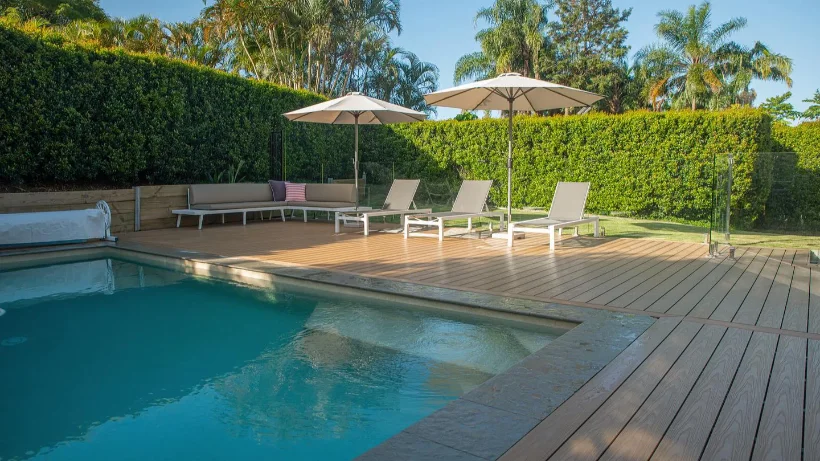
Composite decking is a game-changer for many Australian homeowners. It’s a low-maintenance, cost-effective fixture that significantly enhances outdoor aesthetics and increases property value, providing you with an alluring, resilient product that stands the test of time.
Although composite decking is durable, it isn’t indestructible. Extreme temperature fluctuations, improper installation, insufficient expansion gaps, heavy furniture, and excessive moisture can damage composite decks. You may have to repair or replace the deck over time.
Replacing or repairing a deck can be a daunting task for many homeowners. Which is the more practical alternative? Which strategy fits their budget? As trusted composite decking suppliers in Brisbane with extensive industry experience, we can provide you with expert advice for your long-term peace of mind.
Key Takeaways
- Homeowners often face the choice between repairing an existing deck or replacing it entirely, and the article explains how to decide which option is best.
- Replacing a deck is usually a better long-term investment when the structure has significant ageing, wear, or underlying issues.
- Repair may seem less expensive initially, but it can become costly over time if problems reoccur or underlying structural issues aren’t solved.
- Widespread damage or structural failure often means a full replacement delivers better safety, durability, and value compared to patch repairs.
- Modern composite decking options offer lower maintenance and longer lifespan, making replacement more appealing in many cases.
This blog will explore why replacing your composite deck is a better long-term investment, empowering you to make informed buying decisions that will enhance your quality of life.
The Potential Pitfalls of Composite Deck Restoration
Oftentimes, surface-level damage doesn’t paint the entire picture. It may be concealing red flags and severe issues in the decking’s joists or frame. Ageing composite decks often rot and have loose connections, rusty deck screws, or frail deck railings. Although deck replacement or staining can alleviate the problem, neither strategy can restore the structural integrity of your decking.
Timber decking is prone to moisture absorption, which can lead to decay and become a safety hazard over time. Homeowners who neglect their decks can expect them to collapse if they don’t take action.
Please remember that basic repair or decking board replacement won’t work in that scenario because either alternative compromises long-term safety. Instead, we highly recommend a complete deck replacement because brand-new decking installed by trusted contractors provides a safe, long-term investment and peace of mind.
Decking Repair Expenses Can Accumulate Quickly
Decking repair expenses, at face value, may seem lower than those for a full replacement. However, don’t be misled—multiple repairs over several years may significantly cost more than a one-time investment in a brand-new composite deck. This scenario becomes more realistic when homeowners habitually replace decking boards, railings, or the deck surface without addressing the root cause in the deck frame.
Moreover, even premium, durable surface materials cannot accommodate dilapidated deck joints or hoists. Think of a car with a sleek, shiny facade running on a faulty engine hoist or chassis. No matter how hard you try, it won’t accumulate optimum mileage. The same principle applies to repairing a deck with numerous underlying issues. If this scenario applies to you, we strongly recommend considering a complete replacement, as it is a better long-term investment.
Obsolete Design and Materials: Style and Functional Drawbacks
Composite decks that are at least a decade old often have outdated aesthetics, functionality, and building codes. Please consider these features as red flags, as they significantly compromise your long-term safety. We also encourage Australian homeowners to consider how their existing decking meets their unique lifestyle and aesthetic standards.
Some manufacturers sell composite decks using inferior materials, such as low-grade timber, that tend to deteriorate over time. Fortunately, a timely and cost-effective deck replacement prevents this scenario, allowing you to enjoy a safe and aesthetically pleasing outdoor space that can last for decades. Your new deck’s enhanced layout, customised lighting, and cutting-edge railing systems provide you with excellent value for money and peace of mind.
Premium Composite Decking Materials
Deck replacement enables Australian homeowners to enjoy a timeless, low-maintenance, and resilient outdoor fixture made from high-quality materials that withstand fading, warping, splintering, and insect damage. While inferior-quality decking can give you numerous headaches over time, you can enjoy the multiple benefits of a new, premium deck.
The advantages of a new composite deck with premium materials include the following:
- Low maintenance: High-quality composite decks require minimal upkeep and cleaning, typically only two to three times annually. Unlike conventional timber decks, composite versions don’t need regular staining, sealing, or painting, saving homeowners’ time, money, and effort.
- Durability: Sturdy composite decks made of wood fibres and plastic can endure moisture, insects, and weathering for many years. They also don’t splinter, warp, or rot like traditional timber decking.
- Enhanced safety: Since composite decking doesn’t warp or splinter, it poses no safety hazards. Hence, it’s an excellent outdoor alternative for families with young children or senior citizens.
- Aesthetic appeal: Composite decks mimic the look of natural wood and come in numerous colours and finishes that appeal to many Australian homeowners, blending seamlessly with their outdoor environment.
- Increased property value: Sleek, eye-catching composite decking helps improve your house’s curb appeal and resale value, as many buyers appreciate its aesthetics and functionality.
- Cost-effectiveness: Although the upfront costs of brand-new composite decking can be pricier than those of conventional timber, its durability and low-maintenance features prevent frequent repairs, allowing homeowners to enjoy long-term cost savings.
Improving Structural Integrity, Safety, and Customisation
Reputable, highly experienced composite decking suppliers in Sydney or your local neighbourhood will ensure that every component, including the deck frame and deck surface, complies with local building codes and ensures that they’re structurally sound.
Your contractor will inspect your decking thoroughly, repair faulty components, and install your new deck with careful precision, ensuring your long-term safety and peace of mind.
Please remember that deck replacement isn’t just about fixing structural issues. We highly encourage Australian homeowners to take advantage of this valuable opportunity to reinvigorate and revitalise their outdoor space with premium, cost-effective composite decking. Whether you’re upgrading the footprint, decking material, or layout, a deck replacement offers you unlimited design possibilities that enhance your outdoor aesthetics.
A trusted, highly experienced installer can customise every detail to match your unique lifestyle preferences and aesthetic objectives.
Deck Resurfacing Vs. Deck Replacement
Some homeowners resort to deck resurfacing as a short-term solution for their composite decking. As the term implies, this strategy involves changing the deck boards while maintaining the underlying frame. However, this solution will only work if the frame is in pristine condition with no signs of warping, rotting, or deterioration.
Otherwise, we recommend considering a cost-effective deck replacement from a trusted contractor. Your service provider will ensure that your new decking will endure over time, comply with building codes, and meet your unique objectives.
Modern Safety Codes and Regulations
Composite decking standards have undergone significant evolution in recent years. If you purchased your existing decking before your area enforced new local codes, it may not meet safety requirements for load capacity, railing height, and spacing.
If you’re unsure about your deck’s safety requirements, we encourage you to consult an installer who can update you on contemporary decking safety standards for your peace of mind.
Know the Red Flags For A Possible Deck Replacement
The red flags for possible decking replacement include the following:
- Noticeable rot and decay
- Unstable, warped, misaligned, or splintered decking boards
- Rusty or damaged fasteners
- Defective railings
- Fading or discolouration
- Mould or mildew growth
- Insect infestation
- Faulty drainage
If you notice any of these warning signs on your decking, we strongly recommend contacting a trusted service provider that offers cost-effective deck replacement services for your long-term safety and peace of mind.
Our Most Popular Pioneer Decking Styles
Pioneer decking sets a new standard in composite decking with its unmatched realism. Be sure to view our most popular Pioneer decking styles:
- 5.45m Spotted Gum Eva-Last Pioneer Composite Decking
- 5.45m Blackbutt Eva-Last Pioneer Composite Decking
Frequently Asked Questions
How to fix damaged composite decking?
We recommend cleaning the affected area before attempting to repair it. Please follow these steps:
- Clear the area: Remove furniture, pots, mats, and loose debris from the area.
- Rinse the surface: Use a garden hose to rinse the surface and remove loose grime. If you will use a pressure washer, ensure that you set the pressure to 1,500 psi to prevent damage and preserve the deck’s structural integrity.
- Use a suitable cleaner: Use a composite deck cleaner, a mild dish soap and warm water solution, or a white vinegar and water mixture to clean the affected area. Avoid using bleach or harsh chemicals, as they may exacerbate the damage.
- Scrub and rinse the decking: Use a soft-bristled brush to scrub the decking gently. Rinse away soap or cleaning solution residue with a garden hose.
When you finish cleaning the deck, you can fix it by following these steps:
- Use a composite repair kit: An epoxy-based filler from a composite deck repair kit is perfect for filling deeper scratches. Apply the filler with a putty knife, wiping away excess amounts immediately.
- Use a color-matched repair marker: A touch-up or repair marker can help blend and conceal shallower scratches.
- Sand the surface lightly: Use fine-grit sandpaper to sand minor surface scratches along the direction of the boards.
- Use a composite cleaner: Use composite deck-specific cleaners to remove stains and minor scratches.
If you’re fixing a loose board, use a power drill to tighten it with composite decking screws. Some stubborn or old fasteners may require the use of a deck board removal tool before tightening the loose board. Ask your local retailer if they stock these specialised tools.
On the other hand, unscrew and remove cracked board fasteners. Install a new composite decking board, ensuring it lines up with the joints. Secure the new decking board with the appropriate fasteners, ensuring proper gap space for expansion and contraction.
What maintenance does composite decking require?
Composite decks, while requiring minimal maintenance, benefit from regular upkeep, including sweeping off debris and promptly cleaning spills. Regular maintenance is key to preventing damage and ensuring the deck’s long-term use.
A soft-bristled brush and a mild soap and water solution are ideal for deeper cleaning or stubborn spots. Please avoid using harsh chemicals (such as bleach) and abrasive tools that can damage composite decking. Regular upkeep also includes removing debris from expansion gaps, ensuring the surface remains scratch- and stain-free, and implementing proper drainage and ventilation to prevent mould and mildew.
Is there a filler for composite decking?
Nowadays, homeowners can use a specialised composite decking filler. Please use a filler specifically manufactured for composite materials, such as wax or epoxy fillers, instead of one intended for conventional wood fibres.
On the other hand, you can purchase repair kits for minor scratches on composite decking. More significant damage usually requires board replacement by a reputable contractor to ensure long-term use and peace of mind.
Can composite decking be rejuvenated?
You can rejuvenate composite decking through the following ways:
- Regular deep cleaning: Use a composite deck cleaner or a mixture of mild soap and water—scrub with a soft-bristled brush along the direction of the boards.
- Careful pressure washing: Ensure that you set the pressure to a maximum of 1,500 psi, spraying along the grain and maintaining a distance of at least 30 cm from the surface.
- Use a composite deck brightener: The appropriate composite deck brightener restores colour vibrancy and eliminates rust stains, ensuring long-term visual appeal.
- Timely intervention: Remove oil or grease from composite decks using a degreasing cleaner. A mixture of water and vinegar can remove mould and mildew from the surfaces.
On the other hand, fix deep scratches using manufacturer-provided repair kits. If some boards are significantly damaged, contact a professional installer who can replace them immediately.
How to fix a gouge in composite decking?
You can fix a gouge in composite decking by following these steps:
- Clean the area thoroughly
- Use a composite repair kit with a wax or epoxy filler for small gouges. Deeper ones require a heat gun
- If you prefer a permanent finish, we recommend replacing the damaged board with a new one. Consulting a highly experienced contractor can help you find the exact colour match for your outdoor deck
How to repair a hole in a composite deck?
You can repair a hole in a composite deck by following these steps:
- Clean the area thoroughly
- Fill the hole with a composite-safe epoxy or filler
- Sand the hole once it’s fully dry. Bigger holes usually require board replacement to ensure optimum results and performance
Does deck tape actually work?
Decking tape is a reliable solution that protects the structure’s joists from moisture and rot, ensuring your deck’s durability and longevity. It’s a proven intervention that provides Australian homeowners with long-term peace of mind.
The tape serves as a protective barrier that seals the top of the joists , preventing water seepage and ensuring the durability of the fasteners.
Although decking tape isn’t a mandatory building code requirement in Australia, it’s a proven and effective intervention for composite decks with substructures that are exposed to the elements longer than their surfaces.
Do liquid nails work on composite decking?
Some liquid nail adhesives are suitable for use on composite decks. However, selecting the right product and understanding its restrictions are crucial to your fixture’s structural integrity and longevity.
Although liquid nail adhesives and fasteners secure the bond, they may not be compatible with all types of composite decking. For this reason, check the product label and the manufacturer’s guidelines, as some composites have inferior adhesion properties. Avoid composite decking in situations where a durable, solitary bond will suffice.
Can you repair rotten decking without replacing it?
Wood hardeners, epoxy fillers, or an epoxy resin can repair minor rot in composite decking boards. Severe rotting or rot that has reached the joists requires board or substructure replacement.
On the other hand, minor rotting requires the removal of rotten wood, treatment of the existing area, and the use of epoxy filler or consolidant, depending on the extent of the damage.
Does Gorilla Glue work on composite decking?
Gorilla Glue works well on composite decking because it can adhere to a variety of materials, including composite lumber. This adhesive’s resilience and waterproof properties make it an ideal tool for repairing composite decks. Polyurethane-based adhesives, such as Gorilla Glue, ensure a durable bond and optimum, long-term results.
Is it cheaper to repair or replace a deck?
Repairing a deck is more cost-effective than replacing it in the short term. However, deck replacement can often be more cost-effective from a long-term perspective, especially if the deck sustained significant damage.
If only several boards are affected, replacing them is the more cost-effective option. On the other hand, rotting joists, frames, or support posts require timely replacement, which is the better long-term strategy to ensure long-term safety and avoid unforeseen costs.
Does home insurance cover deck repairs?
Although home insurance covers composite deck repairs, only those caused by a covered event, such as a storm, fire, or a vehicular accident, are included. Unfortunately, home insurance doesn’t cover normal wear and tear and poor maintenance.
Decks are typically covered under home insurance if they are permanently attached to the home. However, please note that your policy’s “sum insured” insures permanent structures, such as composite decks, verandas, and pergolas. If you’re unsure, consult your home insurance agent, who can provide you with valuable, long-term insight.
What glue works on composites?
Australian homeowners typically use epoxy as a composite decking adhesive, offering premium strength and resilience. You can also use polyurethane, acrylics, cyanoacrylates, specialised hot-melt adhesives, or bonding tapes. Consult your trusted local contractor, who can recommend the appropriate adhesive for your specific type of composite decking.
Conclusion
At Ezy Decking, we know that deck replacements require careful thought and planning. You can leave your worries in our capable hands, as we provide reliable, cost-effective composite decking that enhances outdoor aesthetics and meets the unique requirements of our customers.
Ezy Decking provides premium quality composite decking boards with 10 year structural warranty to Brisbane, Gold Coast, Sydney & Northern NSW. Contact us today for a free quote.
Related Articles
Benefits of Aluminium Framing for Composite Decking
Composite decking enhances Australian homes, offering stylish, multifunctional outdoor spaces with strong investment returns. Whether your home is rustic, Mediterranean,…
How to Turn a Concrete Slab or Patio into a Stunning Deck
If your concrete slab or patio feels boring, install a composite deck over it to create a stunning and functional…

Ultimate DIY Guide for Composite Decking
Premium composite decking gives Australian homeowners a cost-effective, visually appealing, and low-maintenance outdoor option. Whether for patios, balconies, pool areas,…