

 Decking Calculator





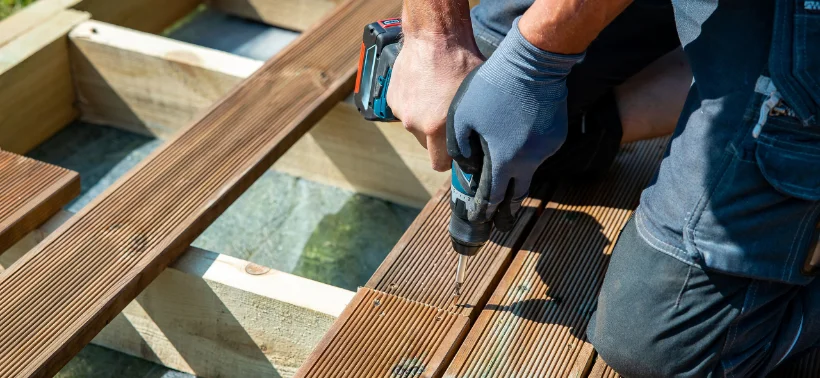
Composite decking’s aesthetics, durability, and low-maintenance features have appealed to many Australian homeowners and business owners. This fixture has significantly enhanced their property value, providing them with a wise, long-term financial investment.
However, please remember that composite decks still require regular cleaning and maintenance to maximise their benefits. Taking proactive steps to ensure proper upkeep prevents costly replacements and provides you with long-term peace of mind.
If you’re new to this undertaking, there’s no need to worry. As a trusted Sydney composite decking suppliers with extensive industry experience, we can guide you through this process. This blog will explore the common composite decking mistakes to avoid, empowering you to take charge of your living space and enjoy a high quality of life.
Key Takeaways
- Using harsh or abrasive cleaning tools that can damage the deck surface.
- Using corrosive or inappropriate cleaning chemicals.
- Ignoring stains or spills – not cleaning them promptly.
- Allowing dirt, debris, leaves or organic matter to accumulate on deck — leading to moisture retention, mould, and mildew or staining.
- Neglecting the gaps or grooves between boards — letting them clog, blocking drainage and ventilation.
- General neglect / irregular maintenance – not establishing a regular cleaning schedule for the deck.
1) Using Harsh Cleaning Tools
Using a wire wool or a scouring pad can scratch your composite decking and compromise its long-term elegance. This fixture’s textured surface, which mimics conventional timber, can succumb to hard, aggressive scrubbing.
Using harsh cleaning tools and techniques can scuff and scratch the surface. A damaged proactive coating reduces the durability and appeal of your composite decking.
For this reason, we recommend using a soft-bristle brush and warm, soapy water to eliminate dirt, debris, and mould from your composite deck. A soft-bristle brush is gentle on the surface, ensuring a thorough clean without leaving unsightly scuffs and scratches. Cleaning your composite deck with this tool every three to four months can help you achieve optimum results.
2) Using Corrosive Cleaners
Harsh scrubbing techniques aren’t the only culprits that damage your composite deck. Corrosive or abrasive chemicals can discolour or degrade this fixture over time. They can deteriorate its protective coating and expose it to harmful elements.
Please remember that the protective coating is critical to preserving the decking’s integrity and visual appeal and preventing unsightly fading and discolouration. Exposure to harsh sunlight and excessive moisture can lead to long-term damage. Taking proactive measures is critical to preventing costly replacements and enjoying peace of mind.
Vigilance is critical when purchasing cleaning solutions. Many cleaners contain bleach or harsh chemicals that compromise your deck’s protective coating and stylish appearance.
Instead, we recommend mild, sustainable cleaners that retain your composite decking’s beauty and structural integrity, such as Ezy Decking’s Composite Bright cleaning solution. This product is specifically designed for composite decking and is gentle and effective.
Alternatively, you can purchase similar composite decking-friendly cleaners online or from DIY stores. If you’re unsure about a product, consulting a trusted composite decking supplier can help you make informed buying decisions.
3) Disregarding Stains and Spills
Ignoring stains and spills can discolour or harm your composite decking. Oil, grease, and food particles can permeate the protective coating if these anomalies linger on your fixture.
For this reason, we recommend cleaning spills and stains immediately to prevent critical damage. You can eliminate stubborn stains with a premium composite decking solution. Timely intervention will preserve your decking’s structural integrity and beauty.
4) Setting Incorrect Pressure Washer Settings
In most cases, using a garden hose to rinse dirt, debris, and mould from composite decks will suffice. It can wash away these impurities after using mild soap and water, preserving your fixture’s visual appeal and durability.
Unfortunately, some homeowners use pressure washers with high settings and hold the nozzle too close to the deck, which can etch, gouge, and damage the surface.
You can prevent this scenario by setting your pressure washer settings to lower than 1500 psi and using a wide fan tip. Ensure that you place the nozzle roughly 25 cm from the surface to prevent significant damage. Homeowners using a garden hose with a spray nozzle can rinse their composite decks without risking costly surface damage.
5) Allowing Grime and Debris Buildup
The accumulation of dirt, leaves, and debris can develop into mould and mildew, staining and damaging your composite decking surface.
We recommend sweeping your deck every one or two weeks to preserve its visual appeal and structural integrity. Ensure that you rinse the surface thoroughly with water using a garden hose or a pressure washer with low settings (lower than 1500 psi) to prevent grime, pollen, or mould spore buildup.
6) Not Checking Decking Gaps
Neglecting composite decking gaps can result in unsightly debris and water accumulation, leading to mould and mildew proliferation.
Inspecting gaps at least once every two weeks will prevent this scenario. You can remove the buildup within the gaps with a spatula or a putty knife. Next, ensure that you rinse your deck surface thoroughly with a garden hose or a pressure washer with a low setting (lower than 1500 psi). Regular gap inspections encourage drainage and airflow, preventing moisture buildup, improving surface appearance, enhancing safety, and extending deck lifespan.
7) Leaving Debris Unattended
Grass, leaves, pollen, grass clippings, soil, dust, sand, food crumbs, small stones, pet hair, and plastic fragments can accumulate quickly on high-traffic outside living spaces. Debris can proliferate in the board gaps, become damp, and lead to organic decay.
Sweep your composite decking every one or two weeks to prevent debris accumulation. This proactive measure will ensure a beautiful, durable composite decking that complements your outdoor aesthetics.
8) Not Eliminating Greasy Stains Immediately
Although composite decking brands’ scratch resistance, resilience, and visual appeal vary, they can still be susceptible to oil and grease stains from food crumbs. These stains are common in busy, high-traffic outdoor areas, including patios and kitchens.
Don’t fall into the trap of allowing grease to proliferate on your fixture. Clean grease immediately to prevent staining and damage to your composite deck. Allowing the grease to accumulate longer will lead to stubborn stains that can be challenging to remove.
You can remove food stains from your deck by following these steps:
- Wear rubber gloves while wiping the food stains with paper towels.
- Use a garden hose to rinse away the residue. If you prefer using a pressure washer, ensure that the setting is below 1500 psi to prevent surface damage.
- Mix warm water and a liquid dish detergent in a bucket. For every 5 litres of water, use approximately 15 ml of detergent.
- Soak a nylon-bristle brush in your solution. Gently scrub over the affected area to eliminate stubborn food stains.
- Next, soak a sponge in the solution and wipe it over the greasy portion of the composite decking. Pouring the solution and leaving it on the affected area for 15 to 30 minutes will expose the hard-to-find grease. Gently scrub it with a sponge afterward.
- Use paper towels to absorb the soap and grease.
- Finally, use a garden hose to spray your deck, removing any loosened grease and soapy water. Stubborn, greasy residue may require additional cleaning with soapy water.
Frequently Asked Questions
Do you leave gaps between composite decking?
Leaving gaps between composite decking boards is critical for temperature-related expansion and contraction. This strategy prevents warping and buckling, ensuring your composite deck endures over time.
Adequate gaps also facilitate proper drainage and airflow, preventing moisture accumulation and preserving the deck’s long-term visual appeal. The ideal gap size is usually between 5mm and 12mm. We recommend checking your composite decking manufacturer’s guidelines for specific recommendations.
What ruins composite decking?
The following factors ruin composite decking:
- Harsh chemicals: Bleach (sodium hypochlorite), paint thinners, and solvents can damage the decking’s protective layer.
- Abrasive tools: Metal brushes, steel wool, coarse-grit sandpaper, power sanders, stiff metallic scrubbers, and heavy-duty scouring pads can scratch the surface and compromise its visual appeal.
- Improper installation: Insufficient spacing between decking boards or using the wrong fasteners can cause the surface to crack or become uneven.
- Trapped moisture: Placing planters, plant saucers, rugs, storage boxes, furniture with non-ventilated bases, rubber or vinyl grill mats, doormats, tarps, coolers, outdoor appliances, and kiddie pools placed on composite decks traps moisture, leading to the growth of mould and mildew.
- Daily wear and tear: Composite decks in high-traffic areas endure daily wear and tear from shoes, pets, and furniture, resulting in surface marks.
- Intense sunlight: Although premium composite decking is UV-resistant, prolonged exposure to harsh sunlight can cause the surface to fade and discolour over time.
- High-pressure washers: High-pressure washers can strip the protective cap, leaving the board vulnerable to fading, stains, and water absorption.
What should you not use on a composite deck?
Avoid using the following products and methods on a composite deck:
- Harsh chemicals (bleach, paint thinners, and solvents)
- Abrasive cleaners
- Painting and staining
- High-pressure washers (keep pressure below 3,000 psi)
- Heavy furniture
- Metal shovels or sharp tools
- Hot grills or fire sources
- Standing water or debris
It’s important to note that using a mild detergent, a soft brush, and water for cleaning can prevent damage and ensure long-term peace of mind. By taking these proactive steps, you can maintain the appearance and integrity of your composite decking.
What is the life expectancy of a composite deck?
A typical composite deck usually lasts between 25 and 30 years. However, some premium decks can last up to 50 years or more, especially when installed correctly and maintained consistently. This long lifespan, coupled with the high return on investment, should give you confidence in your choice of composite decking.
What causes composite decking to warp?
Composite decking often warps due to improper installation and inadequate gaps, which significantly limit its ability to expand and contract naturally in fluctuating temperatures.
Wide joist spacing creates inadequate support, causing the joists (the support beams underneath the decking boards) to bend under weight and eventually warp. Improper fastening and insufficient airflow can also cause the boards to warp or buckle over time.
You can prevent warping by following proper installation procedures. Although DIY composite decking is feasible, this task requires specialised tools and skills. For this reason, contact a reputable installer who can assemble your decking correctly and provide you with long-term peace of mind.
What is the best base for composite decking?
We recommend concrete or other slabs because they provide composite decks with a durable, level surface. Using a pressure-treated timber frame as the base is also ideal. However, please note that this frame is less resilient than composite or metal options.
Regardless of your preference, a stable and level sub-frame is critical for supporting the decking boards and facilitating proper water drainage and airflow.
What eats composite decking?
Although composite decking is pest- and termite-resistant, mice and rats can still cause damage to it. When rodents cannot find enough food, they will chew on composite decking, eventually damaging its surface. On the other hand, Australian carpenter bees can bore holes in composite decks.
Non-physical pet factors, such as prolonged exposure to harsh chemicals, can also damage these fixtures. These substances can produce stains, corrosion, or mould, thereby harming the decking over time.
Can I use a pressure washer on composite decking?
Using a pressure washer on composite decking requires caution, as excessive force can damage the surface.
For this reason, we recommend pressure washer settings no more than 3000 psi. Next, ensure the nozzle is at least 21 cm away from the decking to regulate the water pressure further. Always spray along the direction of the decking boards and rinse them thoroughly with water to eliminate soap residue.
Do you need a council permit for a deck?
Composite decking requires a council permit in Queensland. The area must be at least 10 square metres with a height of at least one metre and f metres in length along each side.
Approval from a licensed building certifier is typically required for roofed decks, as well as unroofed decks that are over 1 m high, exceed 10 square metres in area, or have sides that exceed 5 m in height.
What gap should be left between decking boards?
The gap between decking boards hinges on the board’s width and composition. Regardless of your board’s specifications, we recommend a minimum of 5 mm gaps for boards up to 90 mm wide. On the other hand, wider boards require a minimum gap size of 8 mm to facilitate expansion and contraction.
Always follow your manufacturer’s guidelines when installing composite decking boards. Failure to do so can lead to issues, such as warping, buckling, and uneven surfaces.
What is the joist gap for composite decking?
The joist gap usually measures between 300 mm and 450 mm on-centre. However, this gap may vary depending on the specific composite decking. For instance, the type of decking (solid or hollow) and its stiffness determine the manufacturer’s recommended distance.
Solid board manufacturers usually require joint gaps measuring between 400 mm and 450 mm. On the other hand, budget boards (350 mm) and hollow boards (400 mm) require closer joint spacing.
What is the minimum bearing for composite decking?
The minimum bearing for composite decking varies depending on the product. However, a typical range is between 45 mm and 50 mm for steel supports, and 70 mm for masonry or concrete supports.
Other variations require slightly different specifications, so it’s critical to follow your manufacturer’s guidelines to ensure proper installation, long-term durability, and peace of mind.
Can you use WD-40 on composite decking?
WD-40 is a multi-purpose lubricant and water-displacing spray that can leave residue, roughen the surface, and cause staining, significantly increasing the likelihood of long-term damage. Therefore, it’s generally not ideal for regular cleaning and upkeep of composite decks.
Although some manufacturers say WD-40 is an acceptable method for removing sap, please note that this strategy requires caution. Check your manufacturer’s guidelines or consult a trusted contractor to ensure proper clean-ups.
What is the best thing to clean composite decking with?
The best tools for general cleaning of composite decks are warm, soapy water and a soft brush. Thoroughly rinse the surface with a water hose to remove soapy residue. Tougher, stubborn stains require a specialised composite deck cleaner or a solution consisting of mild dish soap and water.
You can use a pressure washer with settings under 2200 psi to prevent surface and joint damage, board distortion, staining, streaking, maintain the warranty, and ensure peace of mind. For optimum results, spray at least 250 mm from the surface and along the direction of the decking boards.
Decking Bright can be purchased directly from our online store, which, when applied, ensures a fresh, clean look to all composite decks, stains, handrails, cladding, screening, furniture, etc.
Conclusion
Please don’t take these composite deck maintenance tips for granted. Making costly mistakes, such as using harsh cleaning tools and solutions, neglecting stains and spills, using incorrect pressure washer settings, allowing grime and debris buildup, not checking decking gaps, leaving debris unattended, and failing to eliminate greasy stains immediately, can have serious repercussions on your composite decking.
Vigilance and consistency are critical in ensuring your composite deck retains its long-term allure and resilience. Taking proactive measures always provides a high return on investment and peace of mind.
As Australia’s trusted decking suppliers, Ezy Decking has supplied numerous homeowners and businesses with premium composite decks that guarantee a high return on investment.
Ezy Decking provides premium quality composite decking boards with 10 year structural warranty to Brisbane, Gold Coast, Sydney & Northern NSW. Contact us today for a free quote.
Related Articles

Benefits of Aluminium Framing for Composite Decking
Composite decking enhances Australian homes, offering stylish, multifunctional outdoor spaces with strong investment returns. Whether your home is rustic, Mediterranean,…

How to Turn a Concrete Slab or Patio into a Stunning Deck
If your concrete slab or patio feels boring, install a composite deck over it to create a stunning and functional…

Ultimate DIY Guide for Composite Decking
Premium composite decking gives Australian homeowners a cost-effective, visually appealing, and low-maintenance outdoor option. Whether for patios, balconies, pool areas,…