

 Decking Calculator





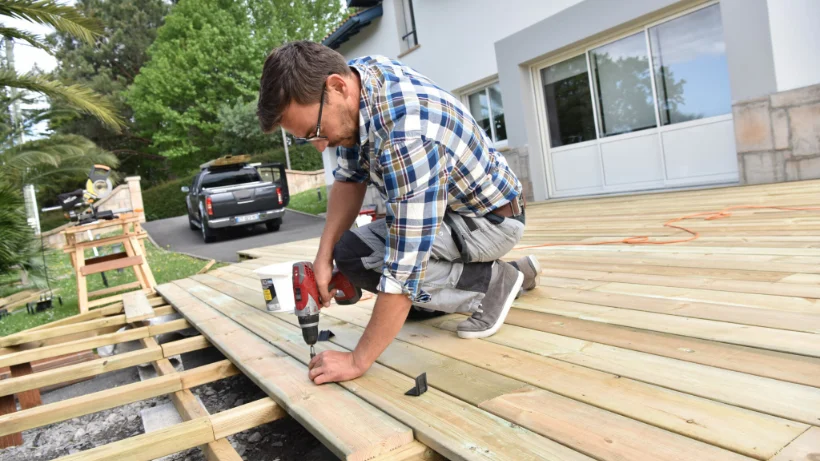
Premium composite decking gives Australian homeowners a cost-effective, visually appealing, and low-maintenance outdoor option. Whether for patios, balconies, pool areas, garden walkways, boardwalks, or rooftop decks, composite decking can transform your space and increase your return on investment. Fancy a smaller weekend project first? Try our guide on how to build a composite decking board garden in 7 easy steps.
Entrusting your installation project to highly experienced Australian decking suppliers often leads to excellent long-term results. However, if you prefer a hands-on approach, a DIY project can also achieve a favourable outcome. If you would rather leave it to the professionals, read our guide on how to choose the right composite decking installer instead
.
Key Takeaways
- DIY offers cost savings and control: Installing composite decking yourself saves on labour costs while allowing full customisation of design, colours, and layout.
- Be aware of challenges: DIY projects require specialised tools, time, and precision—mistakes in spacing or cutting can lead to costly repairs or poor results.
- Planning is essential: Assess your skill level, choose suitable materials, and design a simple layout for easier installation.
- Follow correct installation practices: Proper joist spacing, board gaps, and ventilation are crucial to prevent sagging, warping, and long-term damage.
- Enhancements improve results: Adding railings and lighting boosts safety, usability, and overall aesthetic appeal of your deck.
If you’re embarking on this endeavour but don’t know where to start, we’re here to help. This ultimate DIY composite decking guide provides valuable guidance and insights, enabling you to complete a seamless installation and enjoy a stunning outdoor living area.
What Are the Advantages of DIY Composite Decking?
Although a DIY composite decking project can be challenging, the rewards can be fulfilling. Its advantages include:
- Sense of accomplishment: Completing the project yourself brings a sense of satisfaction and enhances your confidence in doing other DIY home projects.
- Full customisation: A DIY composite decking project offers homeowners full autonomy; they can choose colours, patterns, and accessories to complement their home’s aesthetics.
- Labour cost savings: Installing composite decking yourself eliminates labour costs and enables you to save money. Hiring professional installers may strain your wallet.
- Long-term value: Although composite decking’s upfront costs can be substantial, it doesn’t require frequent staining, sealing, and painting like conventional timber decking. Thus, it becomes a cost-effective option that also improves long-term property value.
Does DIY Composite Decking Have Any Drawbacks?
Despite its benefits, DIY composite decking can pose challenges. It’s important to recognise these drawbacks before deciding which path is right for your project.
These drawbacks include:
- Specialised tools and equipment: Since composite materials behave differently from conventional timber, they require specialised hidden fasteners, impact drills, torque-controlled drivers, circular saws, and rubber mallets, among others. Composite decks also require adequate joist spacing to preserve structural integrity and prevent sagging.
- Time-consuming: While a small deck can take up to four days to complete, a larger, more complex deck can take up to two weeks. This project timeline may take longer if you’re doing it yourself.
- Potential for costly mistakes: Improper cutting or joist and board spacing can lead to costly repairs or reinstallation, potentially negating DIY labour cost savings.
- Visual appeal: Inexperienced homeowners may find achieving clean finishes and proper alignment challenging, possibly compromising the decking’s long-term visual appeal.
- Warranty concerns: Manufacturers often require specific assembly steps and parts to keep the warranty valid. Otherwise, homeowners may be responsible for any future repairs or replacements.
DIY Steps in Installing Composite Decking
If you’re determined to complete your DIY composite decking project, secure the necessary tools and equipment and take the necessary precautions to help you succeed. The steps for installing composite decking include:
1) Determine if installing composite decking on your own is practical
Determining your suitability to install composite decking on your own, is the critical first step in a DIY installation. Whether it’s a brand-new structure, substructure refurbishment, or decking extension, ask yourself if you can complete each feature within a reasonable time.
Can you handle tools and equipment, including mitre saws, circular saws, hidden fasteners, impact drivers, and rubber mallets? If you lack confidence in handling these tools, you may be prompted to ask an experienced friend for help.
If your deck is over 1 metre above the ground, you often need a permit in Australia. Check with your local council for the requirements.
2) Select the appropriate DIY materials
Ezy Decking has a comprehensive range of complete decking materials available, including:
Each decking type has its own pros and cons. If you need help deciding the best composite boards for your DIY project, contact the team at Ezy Deckingcking.
3) Design your composite decking
Considering these factors will facilitate a smooth composite decking installation:
Deck height and shape: These factors significantly affect the time and effort you will invest in your project. We recommend assembling a low-to-mid-level deck to avoid complex railing or stair installation.
Consider a simple, elegant, square- or rectangular-shaped deck that’s easy to assemble and provides unmatched visual appeal.
Deck height and shape:
These factors significantly affect the time and effort you will invest in your project. We recommend assembling a low-to-mid-level deck to avoid complex railing or stair installation.
Consider a simple, elegant, square- or rectangular-shaped deck that’s easy to assemble and provides unmatched visual appeal.
Decking configuration
Install the composite decking boards edge-to-edge to facilitate easier fastening of the interior components. Straight-laid deck boards’ lack of complicated substructure framing makes them ideal for first-time DIY homeowners.
If you prefer other composite decking patterns, seek the assistance of a reputable, experienced contractor.
End-cut concealment
Consult a trusted decking supplier on the appropriate fasteners for the joist’s exterior. For a simpler installation, conceal the ends with a fascia board raised to the decking’s level. Consider a picture frame border for a clean, elegant finish.
Colour selection
Choose mid-to-dark, warm, or modern hues, which help hide imperfections. Colours like deep brown, charcoal, grey, sandstone, or natural wood also show less dirt and dust. This will make the decking process cleaner and easier.
4) Understand composite decking assembly best practices
Composite decking and conventional timber decking best practices are similar except for the following:
Substructure framing
Typical composite decking joist spacing is 400 mm on centre. Reducing it to 300 mm provides a more rigid feel similar to that of traditional timber decking.
We recommend spacing boards between joists by 100 mm to 150 mm to prevent sagging, ensure proper drainage and airflow, and maintain long-term visual appeal. If timber joists feel like a hassle, consider aluminium framing for composite decking instead.
Deck board spacing
3 to 5 mm is the typical spacing for residential composite decking boards, helping prevent long-term buckling or warping. However, wider gaps may be more appropriate for hotter climates to accommodate board expansion.
Leave a slightly large gap at the board ends to allow length expansion. Always follow the manufacturer’s guidelines to accomplish the best long-term results.
5) Analyse railing alternatives
A durable, aesthetically pleasing railing complements your composite decking perfectly, enhancing long-term property value and curb appeal.
If your decking is below 1 metre off the ground, it usually won’t require a railing. On the other hand, Australian residential code compliance and safety standards require a railing for decks that are more than 1 metre high.
Check your local building codes if this guideline applies to your situation.
6) Consider deck lighting
Composite deck lighting is a cost-effective measure that improves safety, extends usability, creates a warm, inviting atmosphere, enhances home security, and highlights decking features.
It’s important to note that lighting may need to be installed before you prepare your decking surface. Always refer to the manufacturer’s guidelines to achieve the best results. Whether you prefer temporary string lights or permanent lights, consider LED lighting that’s low-energy, long-lasting, and low-maintenance.
FAQs
Can you install composite decking yourself?
Yes, composite decking can be installed as a DIY project if you have the right tools, preparation, and understanding of the process. Many systems are designed to be user-friendly, often using clip or fixing systems that simplify installation. However, it still requires careful planning, accurate measurements, and attention to detail. Ensuring the subframe is properly constructed and level is especially important. While it is achievable for experienced DIYers, those unfamiliar with decking projects may find it more challenging.
What tools are needed for DIY composite decking installation?
Installing composite decking typically requires standard tools such as a drill, saw, measuring tape, level, and fasteners or clips designed for the boards. Additional tools may be needed for preparing the subframe and ensuring proper alignment. Having the right tools helps improve accuracy and efficiency during installation. Being well-prepared before starting the project reduces delays and helps achieve a better result.
Why is planning important before installing composite decking?
Planning is important because it helps ensure the project runs smoothly from start to finish. This includes measuring the area, determining the layout, and selecting appropriate materials. Proper planning also involves considering drainage, ventilation, and spacing requirements. Taking the time to plan helps prevent mistakes during installation and ensures the deck performs as intended.
What are the key steps in installing composite decking?
The process generally includes preparing the site, building a stable subframe, and installing the decking boards. Each step needs to be completed carefully to ensure the deck is level, secure, and properly spaced. Following recommended guidelines helps maintain the structure and appearance of the deck. Skipping steps or rushing the process can lead to issues over time.
Is professional installation better than DIY for composite decking?
Professional installation can offer more assurance that the deck is built correctly, especially for larger or more complex projects. Experienced installers understand the materials and can handle potential challenges more efficiently. While DIY can be cost-effective, professional installation may help avoid mistakes that could lead to additional costs later.
Conclusion
DIY composite decking installation can be an exciting endeavour and allows you to achieve a sense of satisfaction, save on labour costs, receive long-term value, and customise your outdoor living space.
On the flip side, DIY composite decking’s drawbacks include an increased likelihood of costly mistakes, long project timelines, specialised tools, warranty concerns, and compromised visual appeal. Considering these disadvantages and following the recommended steps ensures a simpler, more satisfying composite decking installation.
Take that all-important step with us. Ezy Decking is a trusted supplier of premium Sydney composite decking boards, providing homeowners with a high return on investment and 100% customer satisfaction.
Ezy Decking provides premium quality composite decking boards with 10 year structural warranty to Brisbane, Gold Coast, Sydney & Northern NSW. Contact us today for a free quote.
Related Articles
Benefits of Aluminium Framing for Composite Decking
Composite decking enhances Australian homes, offering stylish, multifunctional outdoor spaces with strong investment returns. Whether your home is rustic, Mediterranean,…
How to Turn a Concrete Slab or Patio into a Stunning Deck
If your concrete slab or patio feels boring, install a composite deck over it to create a stunning and functional…
How Decking Colour Variation Enhances Your Outdoor Aesthetic
Composite decking boards have been a favourite lifestyle choice of many Australian homeowners. Their durability, visual and curb appeal, low…