

 Decking Calculator





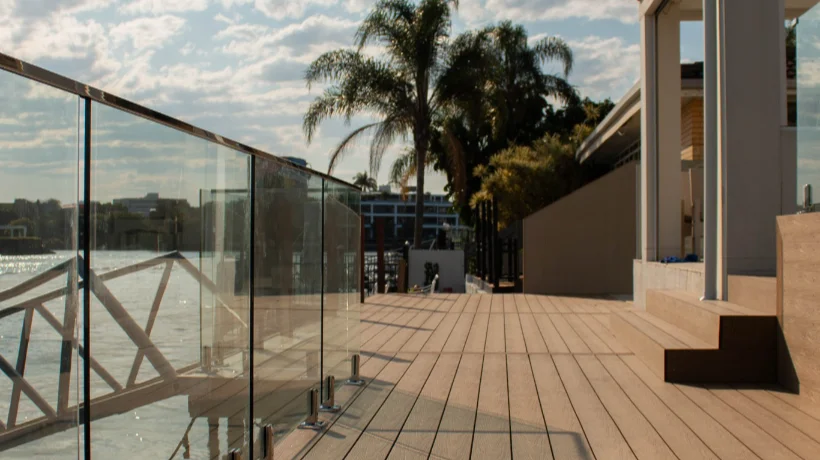
Many Australian homeowners have invested significant time, energy, and resources in transforming their gardens into modern-day sanctuaries where they can relax and spend quality time with their families. Nowadays, industry experts consider lawns as extensions of the home, ideal for parties, barbecues, or relaxing in an outdoor patio, swimming pool, or hot tub.
Premium composite decking helps enhance your garden’s aesthetics, curb appeal, and functionality, giving you confidence in your investment and peace of mind through its durability and low-maintenance features.
If you’re considering solid and hollow composite decks but don’t know where to start, there’s no need to fret and fume. As a trusted provider of high-quality composite decking in Australia, we can guide you through this journey.
Key Takeaways
- Key structural difference: Hollow boards have internal cavities, making them lighter, while solid boards are fully dense, offering a sturdier and more robust feel.
- Weight and installation: Hollow decking is easier to handle and install due to its lightweight design, whereas solid boards are heavier and may require more effort or assistance.
- Cost considerations: Hollow boards use less material, making them more affordable; solid decking costs more upfront but offers better long-term value.
- Durability and performance: Solid decking is stronger, handles heavy traffic better, and resists wear, while hollow boards are better suited for standard residential use.
- Thermal movement and aesthetics: Hollow boards may expand/contract more and need end caps for a clean finish, whereas solid boards offer greater stability and a more premium appearance.
This blog will delve deeper into the key differences between solid and hollow composite decking, empowering you to spruce up your garden with confidence and receive a high return on investment.
Why Is Composite Decking Superior to Timber Decking?
For over a century, traditional timber (wooden) decking has been popular worldwide. However, the 1990s marked a significant paradigm shift. Technological advancements and the surging popularity of environmentally friendly, low-maintenance alternatives laid the groundwork for composite decking.
Composite decking has never looked back, becoming the more popular choice among Australian homeowners for the past four decades. Its key advantages over conventional timber decking include the following:
Innovation
Composite decking offers homeowners many colours and styles, allowing them to customise their gardens and make them uniquely their own. Whether you prefer natural timber stone, charcoal grey, redwood, taupe, or driftwood, these fixtures add a vibrant, elegant touch to your outdoor space.
Lower long-term cost
Although premium composite decking has high upfront costs, its low-maintenance features and durability prevent costly repairs and maintenance, providing homeowners with a proven, cost-effective fixture for their gardens and outdoor spaces.
Slip-resistant features
Unlike conventional timber decking, composite decking boards significantly reduces the risk of slipping in wet conditions. Consider installing the slip-resistant side face up and the grooves perpendicular to walkways and doorways to prevent accidents and maintain long-term peace of mind.
Durable
Manufacturers engineered premium composite decking with anti-warp and anti-splitting features, ensuring long-term durability and a high return on investment.
Consistent appearance
Manufacturers provide buyers with consistently-sized and coloured composite decking boards, ensuring a predictable, stylish, and visually appealing finish.
UV protection
Manufacturers equipped modern composite decking with UV-resistant materials, ensuring longer natural colour retention than traditional timber decking.
Pest and insect-resistant
You don’t have to worry about pests and insects infiltrating and proliferating in your composite timber decking. Its robust, dense construction prevents these scenarios and provides you with long-term peace of mind.
Sustainability
Nowadays, many Australian homeowners have embraced sustainability to promote a greener planet. For this reason, they choose premium, eco-friendly composite decking sourced from recycled hardwood fibres and recycled plastic, minimising carbon footprint and maximising long-term use and sustainability.
Low-maintenance
Traditional timber decking requires regular wood treatments, re-sealing, and rigorous maintenance to retain its appeal and functionality.
On the other hand, composite decking only requires routine cleaning (frequent sweeping, occasional washing, and yearly deep cleaning), relieving homeowners of the burden of tedious, frequent maintenance.
How Do Solid And Hollow Composite Decking Stack Up?
Understanding the key similarities and differences between solid and composite decking allows Australian homeowners to receive a high return on investment.
Seeking professional guidance from a trusted contractor can help them feel supported and confident in their buying decision.
Similarities Between Solid And Hollow Composite Decking
Solid and hollow composite decking share several unique advantages, including the following:
- Superior stain resistance
- Premium anti-slip properties ideal for outdoor areas with swimming pools, hot tubs, and jacuzzis
- Dense surfaces that ensure minimal permeability
- Durable against warping, decay, and splintering
- Easy assembly and installation
- Both options come with long-term warranties for homeowners’ peace of mind
Differences Between Solid And Hollow Composite Decking
Although solid and hollow decking share several impressive benefits, they differ significantly in several aspects, including the following:
Configuration
Hollow composite decking incorporates a honeycomb design with internal cavities, facilitating easier handling and hauling.
On the other hand, the compact core of solid composite decking makes it heavier and more challenging to transport. Nevertheless, the dense core provides a robust underfoot feel and confidence in its long-term durability. Weight matters with PVC too – see our comparison of composite decking vs PVC.
Assembly
Hollow composite decking’s lightweight core makes assembly and lifting easier, but following the manufacturer’s guidelines is essential to prevent damage and ensure a high-quality finish.
In contrast, solid composite decking’s heavy construction requires several people to handle and assemble it. Consult a trusted decking installer to assist you with this endeavour and ensure seamless assembly. A sturdy substructure helps too – see our guide to aluminium framing for composite decking.
Aesthetics
Although the exposed edges of hollow composite decking may compromise its appearance, decking end caps can address this issue, ensuring a smooth, elegant finish. For a different kind of “cap”, see our guide to capped vs uncapped composite decking.
Conversely, manufacturers design premium solid composite decking with your preferred colours and styles, ensuring customised aesthetics for your outdoor space. Whether you prefer light oak, walnut, mahogany, black, or greige, this fixture’s stunning elegance is a game-changer for lush gardens.
Thermal expansion
Unfortunately, the internal cavities of hollow composite decking can cause thermal expansion over time. Higher temperatures can increase the likelihood that boards will contract and sustain long-term damage. For this reason, we strongly recommend placing the appropriate expansion gaps and following the manufacturer’s guidelines for long-term peace of mind.
On the other hand, the dense core of solid composite decking prevents thermal expansion and ensures optimal performance, regardless of the prevailing climate. Following the ideal spacing and butt joint installation enhances these benefits considerably.
Cost
Hollow composite boards use less material, making them more affordable than solid versions. They are the ideal choice for homeowners on a limited budget who prioritise high-quality outdoor fixtures.
Solid composite boards are the better alternative for homeowners seeking a premium, low-maintenance, and robust Sydney decking solution ideal for heavy use. Although its upfront cost is higher than a hollow composite deck, its long-term cost effectiveness allows you to break even and reap its benefits over time.
Performance and resilience
Since hollow composite decking boards are prone to expanding and contracting, they’re less durable than solid composite decks. For this reason, the former isn’t ideal for high-traffic and high-impact outdoor areas. However, hollow composite decks exceed expectations in typical lawn or domestic outdoor environments, delivering good performance and value.
Finally, the dense, sturdy construction of solid composite decks endures wear and tear, heavy foot traffic, impact, and extreme weather conditions while providing premium sound absorption. They’re ideal for homeowners who prefer a fixture well-suited for frequent use and harsh weather.
FAQs
What is the difference between solid and hollow composite decking?
Solid composite decking boards are dense and fully filled, while hollow boards have internal gaps or chambers that reduce weight. The main difference lies in structure, which affects strength, weight, and cost. Solid boards tend to feel more substantial underfoot, while hollow boards are lighter and easier to handle during installation. Both options are designed for outdoor use, but their performance can vary depending on the application.
Is solid composite decking more durable than hollow?
Solid composite decking is generally considered more durable due to its dense construction. It can handle higher loads and is often used in areas with heavier foot traffic. Hollow decking is still durable but may not offer the same level of strength in demanding environments. The choice depends on how the deck will be used and the level of durability required.
Is hollow composite decking more cost-effective?
Hollow composite decking is often more cost-effective than solid boards because it uses less material. This can make it a suitable option for projects where budget is a consideration. While it may have a lower upfront cost, it is important to ensure it meets the performance requirements of the space.
Which option is easier to install?
Hollow composite decking is typically easier to handle and install due to its lighter weight. This can make the installation process more manageable, especially for larger projects. Solid boards, being heavier, may require more effort during installation but provide a more robust feel once in place.
How do you choose between solid and hollow composite decking?
Choosing between solid and hollow composite decking depends on factors such as budget, intended use, and desired feel underfoot. Solid boards may be preferred for high-traffic or structural applications, while hollow boards can be suitable for lighter-use areas.
Conclusion
Both hollow and solid composite decking offer unique benefits that appeal to different tastes and objectives. Your choice ultimately depends on your long-term preferences. For instance, if you prefer low-maintenance, easy-to-install, and visually appealing decking, either option can meet your needs.
On the other hand, hollow composite decking is a better solution for homeowners seeking a low-cost, lightweight fixture that’s perfect for typical gardens. If you’re looking for long-term durability and sound absorption in high-traffic areas, solid composite decking is the better choice. Whether you prefer hollow or solid composite decks, consulting a reputable contractor can help you make an informed decision.
Ezy Decking provides premium quality composite decking boards with 10 year structural warranty to Brisbane, Gold Coast, Sydney & Northern NSW. Contact us today for a free quote.
Related Articles

Benefits of Aluminium Framing for Composite Decking
Composite decking enhances Australian homes, offering stylish, multifunctional outdoor spaces with strong investment returns. Whether your home is rustic, Mediterranean,…
How to Turn a Concrete Slab or Patio into a Stunning Deck
If your concrete slab or patio feels boring, install a composite deck over it to create a stunning and functional…

Ultimate DIY Guide for Composite Decking
Premium composite decking gives Australian homeowners a cost-effective, visually appealing, and low-maintenance outdoor option. Whether for patios, balconies, pool areas,…