

 Decking Calculator





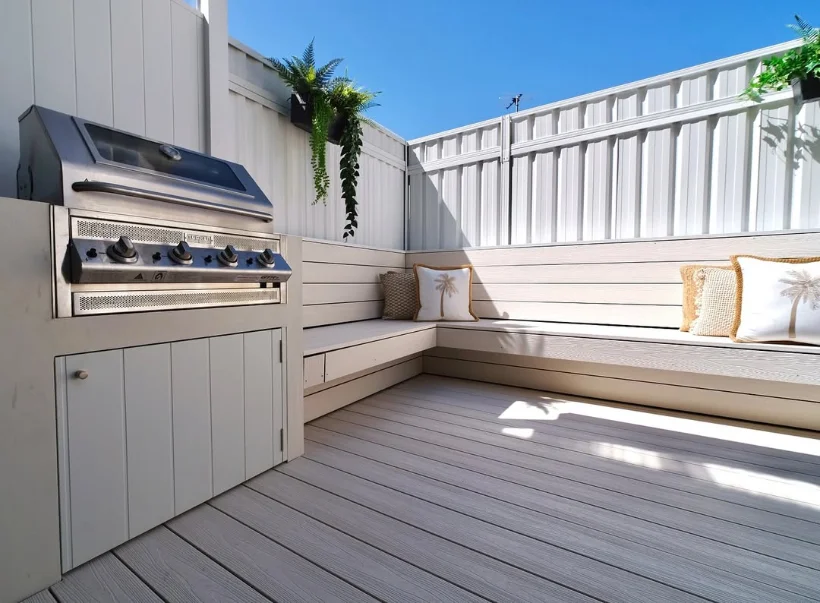
Regardless of your unique preference, a patio or composite decking can be a game-changer for your outdoor living area. Either option complements your outdoor aesthetics, enhances curb appeal and property value, and transforms your living space into a modern sanctuary ideal for family social gatherings and barbecues.
Manufacturers source patios from solid materials, such as concrete, pavers, stone, or tiles, creating a ground-level, solid, masonry look. On the other hand, they source composite decking from recycled wood fibres and plastics, creating a timber-like, warm, natural appearance.
While both offer Australian homeowners a durable, low-maintenance alternative, your choice ultimately depends on your budget, aesthetic preferences, and long-term use. If you’re at a crossroads, we can help you make an informed decision.
Key Takeaways
- Different structures and materials: Patios are ground-level surfaces made from concrete, stone, or pavers, while composite decking uses recycled wood and plastic boards installed on a raised subframe.
- Installation suitability varies: Composite decking works on uneven or sloped areas and can be elevated, whereas patios require flat, stable ground with proper excavation and base preparation.
- Maintenance differences: Composite decking is very low maintenance, while patios may need resealing, weed control, and repairs for cracks or chips.
- Durability and lifespan: Patios can last longer, while composite decking typically lasts up to 50 years but resists rot, pests, and moisture.
- Best use depends on needs: Choose decking for comfort, aesthetics, and flexibility; choose patios for heavy loads, ground-level spaces, and long-term structural strength.
This blog will delve deeper into the key differences, pros, and cons of patios and composite decking, empowering you to make informed buying decisions and take charge of your outdoor living experience.
What Is A Patio?
Patio decking is a ground-level outdoor area contrasting with raised, structural decks settled on soil or a compacted base. Manufacturers source non-timber materials from pavers, stone, or tiles to create durable patio decks.
These areas are ideal for contemporary, minimalist outdoor spaces with flat landscapes. Installation typically requires excavation, levelling, compacting, drainage layers, and a flat, stable base.
Although patios are low-maintenance, they may require weed control between pavers and occasional pressure washing. Concrete and stone versions may also require resealing to retain long-term durability.
Concrete slab and concrete paver patios usually last 50 years or more. On the other hand, natural stone alternatives (granite, slate, travertine, bluestone) can last up to 100 years. To fully reap the benefits of your patio, choose one that complements your outdoor aesthetics and intended long-term use.
What Is Composite Decking?
Manufacturers source composite decking, a popular alternative to conventional timber, from recycled wood fibres, plastics, adhesives, and colourants, creating a stunning outdoor fixture that mimics natural wood.
Composite decking is a resilient structural element that can withstand moisture, rotting, insects, pests, fading, and splintering. For this reason, it’s an ideal choice for many Australian homes, including those with pets and young children. Homeowners can choose between the capped (equipped with a durable protective layer) or uncapped versions.
Unlike traditional timber decking, composite decking is a low-maintenance outdoor feature that requires only occasional cleaning (once or twice a month). The latter’s recycled materials and low-maintenance features make it ideal for homeowners building sustainable homes with minimal environmental footprint.
What Are The Difference Between Patios And Composite Decking?
Understanding the key differences between patios and composite decking provides homeowners with unique insights, allowing them to choose the best setup for their outdoor living space. Their significant differences include the following:
Size
You can purchase 2.4 m or 4.4 m composite decking boards and assemble them on structural joists. On the other hand, patios require a ground-level, sturdy concrete base and paving slabs.
Resilience
Composite decking’s combination of recycled wood fibres and plastic ensures long-term durability and a lifespan of up to 50 years with proper upkeep. Although patios are also durable, they can crack over time if the ground shifts or if drainage is improper.
Maintenance
Although durable, patio slabs may require more maintenance due to cracking, chipping, and fading over time. Conversely, composite decking only requires sweeping once or twice a month and deep cleaning once a year.
Materials
Manufacturers source premium composite decking from recycled wood fibres and plastic to mimic the appearance of natural wood. On the other hand, they source patios from paving stones, whose quality determines the amount of future maintenance.
Assembly
Contractors install composite decking on a subframe (timber, steel, or aluminium), which can be raised or installed on uneven surfaces, making it ideal for sloped areas or sites where height is critical.
Conversely, patios require excavation, levelling, compacting, and drainage layers on a flat, stable base, making them ideal for flat outdoor areas.
Moisture resistance
Unlike traditional timber, composite decking has very low water absorption, making it ideal for areas near swimming pools or hot tubs, or for use in wet climates.
Similar to composite decking, patios won’t warp, rot, or swell from water exposure. However, they can crack if water permeates the surface and eventually freezes in colder climates.
Benefits and Drawbacks of Composite Decking and Patios
| Composite Decking | Patios | |
| Wide colour range | Yes | No |
| Can sit on a raised platform | Yes | No |
| Low maintenance | Yes | Yes |
| Can endure heavy resistance | No | Yes |
| Sustainability | Yes | No |
| Long-term durability | Yes | Yes |
Composite Decking Benefits
The benefits of composite decking include the following:
- Homeowners can assemble them on level or raised surfaces.
- Composite decking is a low-maintenance option that doesn’t require sanding, varnishing, or staining.
- Homeowners can choose from a wide range of colours and designs to match their outdoor aesthetics.
- Composite decking’s low absorption rate prevents the boards from decaying or splitting over time.
- Their structure ensures that pests and insects cannot damage or proliferate within the boards.
- Composite decking colours offer long-term UV resistance that prevents significant fading in the future.
- Manufacturers equip these surfaces with non-slip surfaces, making them ideal for areas with swimming pools and hot tubs, preventing accidents and ensuring long-term peace of mind.
- Contractors source composite decking from 100% sustainable, recycled materials, promoting a greener planet and minimal environmental footprint.
Composite Decking Drawbacks
The drawbacks of composite decking include the following:
- Composite decking’s limited weight capacity isn’t ideal for heavy items, including heavy furniture, vehicles, large fountains, raised water tanks, and large garden statues or boulders
- Although the upfront cost of composite decking is higher than that of traditional timber decking, its low-maintenance features yield longer-term longer cost savings
- While well-maintained composite decking can last up to 50 years, it doesn’t endure as long as natural stone patios, which can last up to 100 years
- Some local councils require permits for installing composite decking. Check with your local council if this condition applies to you
- Composite decking installation can be complicated. However, its low-maintenance features offset this inconvenience
Patio Benefits
The benefits of patios include the following:
- Unlike composite decking, patios can withstand heavy loads, including large outdoor fixtures, large fountains, vehicles, massive planters, fireplaces, grills, and outdoor gym equipment
- Patios’ wide variety of designs includes classic stone patios, patios with water pits or fireplace lounges, and patios with gardens. Whether you prefer a modern or minimalist patio, you can choose a design that aligns with your unique aesthetic preferences
- Similar to composite decking, patios require low maintenance but may crack over time, especially when water can permeate and freeze in cold climates
- Premium patios have longer lifespans than composite decking, which can last up to 50 years with proper maintenance
Patio Drawbacks
The drawbacks of patios include the following:
- Patios require concrete installation and landscaping on a flat, level surface. For this reason, they are not ideal for sloped areas or areas where height is critical
- These outdoor areas may crack and chip over time, especially when using poor base or subgrade preparation
- Unlike composite decking, patios are not a sustainable option for Australian homeowners
- Patio assembly can be pricey, time-consuming, and complicated
Composite Decking or Patios: Which Is Ideal for You?
Choosing between composite decking and patios requires several key considerations, including the following:
- Location: This is a critical consideration when choosing between the two alternatives. Composite decking is ideal for raised or uneven ground, poolside areas, balconies, terraces, rooftops, outdoor lounges, and entertainment areas. On the other hand, patios are suitable for ground-level areas, spaces requiring heavy loads, high-traffic zones, and areas in wet or harsh climates.
- Purpose: If you have an existing balcony, installing Sydney composite decking adds a stylish aesthetic touch and a comfortable underfoot feel. Conversely, patios offer more privacy since they can only be installed on ground-level surfaces.
- Assembly: While both composite decking and patios require time-consuming, complex assemblies, you can assemble the former on ground-level, sloped, or raised surfaces, which can significantly lower costs and facilitate project timelines.
- Visual appeal: Either option offers homeowners numerous colour and design options for their outdoor living spaces. Paving stone patios come in numerous intricate patterns and designs, while composite decking has a wide range of colours, which can be woodgrain-textured, depending on your preference.
FAQs
What is the difference between a patio and composite decking?
A patio is typically made from hard materials such as concrete, stone, or pavers, while composite decking is constructed using boards made from a blend of wood fibres and plastic. Patios create a solid, fixed surface, whereas composite decking is built on a raised frame. The difference lies in both structure and materials, which can influence appearance, comfort, and how each surface is used in an outdoor space.
Which option is more comfortable underfoot?
Composite decking is often considered more comfortable underfoot because it provides a slightly softer and warmer surface compared to hard patio materials. It can feel more comfortable for walking barefoot, especially in outdoor living areas. Patios, depending on the material, may feel harder and can become hotter under direct sunlight.
Is composite decking more expensive than a patio?
Composite decking can have a higher initial cost compared to some patio options, particularly basic concrete or paving. The cost depends on materials, design, and installation. While patios may be more budget-friendly upfront, composite decking offers benefits such as durability and lower maintenance, which may influence long-term value.
Which option requires less maintenance?
Both patios and composite decking are relatively low maintenance, but composite decking does not require sealing or frequent treatments. Patios may need occasional cleaning and, in some cases, maintenance of joints or surfaces over time. The level of maintenance depends on the materials used and how the space is exposed to the elements.
How do you choose between a patio and composite decking?
Choosing between a patio and composite decking depends on your priorities, including budget, design preference, and how you plan to use the space. Patios offer a solid, ground-level surface, while composite decking provides a raised, more flexible structure. Considering how each option fits your outdoor area and lifestyle helps guide the decision.
Conclusion
Choosing between a patio and composite decking ultimately depends on your location, purpose, assembly requirements, and aesthetic preferences. Regardless of your choice, they can significantly enhance curb appeal, especially if they extend your home’s lifespan and improve its functionality.
Doing extensive research and consulting a trusted home builder or contractor provides valuable insights and guidance, allowing you to make an informed, long-term decision and take control of your living arrangements.
Ezy Decking provides premium quality composite decking boards with 10 year structural warranty to Brisbane, Gold Coast, Sydney & Northern NSW. Contact us today for a free quote.
Related Articles

Benefits of Aluminium Framing for Composite Decking
Composite decking enhances Australian homes, offering stylish, multifunctional outdoor spaces with strong investment returns. Whether your home is rustic, Mediterranean,…

How to Turn a Concrete Slab or Patio into a Stunning Deck
If your concrete slab or patio feels boring, install a composite deck over it to create a stunning and functional…

Ultimate DIY Guide for Composite Decking
Premium composite decking gives Australian homeowners a cost-effective, visually appealing, and low-maintenance outdoor option. Whether for patios, balconies, pool areas,…